Executive
Coaching.
Navigate. Influence. Lead.
I specialise in helping managers and directors close that gap. Having spent fifteen years as a political strategist before becoming a coach, I understand how power and influence really work.Book a free 45-minute callBook a free 45-minute call

Build real influence and authority. On your own terms.
Demystify power
Every organisation has competing agendas and unspoken rules. Your progress depends on navigating those rules and knowing how to build your credibility internally. I'll help you develop the political awareness to do this successfully.
Strengthen your authority
Self-awareness alone isn't enough at senior levels. We'll work on showing up confidently in high-stakes situations and strengthening your emotional response and judgement when challenged, so people follow your lead rather than question it.
Build greater influence
Your impact often relies on people you don't manage directly. Getting buy-in across functions is harder than managing down, and managing upward is even harder. Coaching will sharpen how you influence sideways and above you.
Lead more effectively
The gains from coaching extend beyond performance. Difficult conversations become easier. Trust in your team improves, relationships strengthen, and you learn to handle pressure without eroding your credibility or energy.
"I cannot recommend Kris highly enough."
Chris Piastrino
Commercial Director, NYC


Reach your
next milestone
with executive
coaching
Reach your next milestone
The further you progress, the harder it becomes to get honest, objective feedback. Your manager is busy and your peers are competitors as much as colleagues. Also, at this level, needing guidance is often not something you're supposed to admit.
I give you the direct perspective you're not getting elsewhere and help you apply it immediately to your most important relationships and situations. We work on real conversations, real dynamics, and real leadership challenges as they happen.
The result is sharper judgment, stronger presence, and greater influence with the people who matter most to your progress.
The further you progress, the harder it becomes to get honest, objective feedback. At this level, needing guidance isn't something you're supposed to admit.
As your coach, I'll help you translate insights into action through practical strength-building,
real-life practice and genuine accountability.
What you can expect:
- A structured leadership assessment
- Optional 360 feedback round
- A personalised development focus
- Directness, discretion, and occasional humour
- Practical strategies you can apply immediately
Coaching will help you:
- Project with authority in high-stakes situations
- Navigate complex relationships with greater skill
- Build influence across your organisation
- Navigate transitions with confidence
- Lead under pressure without losing composure
1
Understand
your patterns
Identify how you show up under pressure, where you lose influence, and what's holding you back
3
Build core
skills
Develop executive presence, relational intelligence, and emotional composure through focused practice
5
Track your
impact
Measure changes in how people respond, the quality of your relationships, and your effectiveness as a leader
2
Clarify what
matters
Pinpoint your most important relationships and the capabilities that will make the biggest difference
4
Apply in
real time
Use new approaches with your actual team, stakeholders, and difficult situations
1
Build your
self knowledge
Spot your patterns quickly and gain clarity on your strengths, blind spots, and impact
2
Identify goals
and barriers
Identify what matters most and what’s standing in the way of your progress
3
Expand your
skills
Experiment with new perspectives, tools, and behaviours in real situations
4
Practise
new behaviours
Turn insight into consistent habits through feedback, accountability, and reflection
5
Watch
perceptions shift
See your impact grow as others respond to your steadiness, confidence, and authenticity

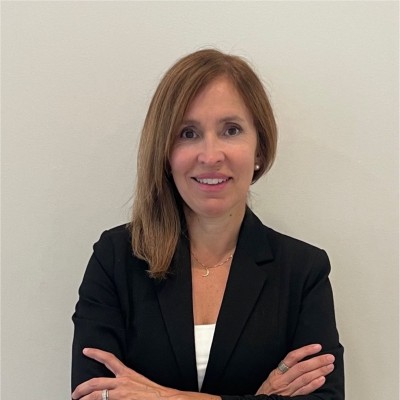

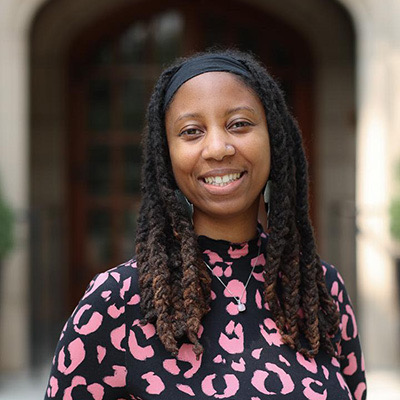

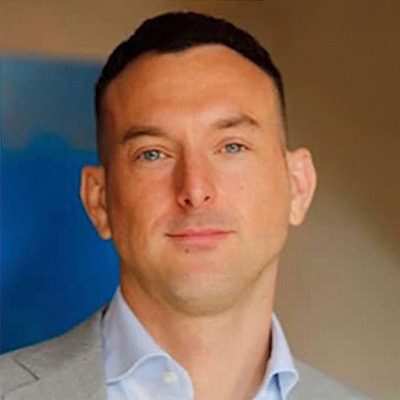

Kris is great at keeping sessions focused, guiding conversations back to your objectives, and leaving you with clear next steps. If you’re looking for a coach who listens deeply, keeps you accountable, and ensures progress towards your goals, he’s the coach to work with!
Who I typically work with.
I coach managers and directors, from new directors to VPs, across a wide range of sectors, including financial services, tech and professional services. Many are internationally mobile, working across countries and teams where the unwritten rules of influence are different in each.
I've coached leaders at Meta, Amazon, PepsiCo, L'Oréal, Boots UK, DHL Group, Mercedes-Benz, Ticketmaster and other large corporates, as well as people in start-ups and scale-ups. I also work through trusted platforms that match coaches with corporate clients.
My clients come from a wide range of backgrounds, including many from underrepresented groups and the LGBTQ+ community.
Senior Managers – Build authority beyond your expertise
You’re already respected for what you deliver, but want to build greater influence and political credibility.
Coaching will help you:
• Build authority beyond your role
• Influence without formal power
• Navigate internal politics
• Communicate with greater impact
• Strengthen your reputation
New Directors – Lead at a different level and step up with confidence
You’ve stepped up, but the rules have changed. Technical credibility matters less than how you lead and show up under scrutiny.
Coaching will help you:
• Make the shift from expert to leader
• Build greater executive presence
• Manage upwards and sideways
• Establish credibility quickly
• Gain confidence in your judgement
International Professionals – Lead across cultures and complexity
You’re operating across systems and organisations that don’t always follow the same rules.
Coaching will help you:
• Build credibility in new environments
• Decode cultural power dynamics
• Handle relocation pressures
• Set boundaries in unfamiliar systems
• Build new networks locally

Book a free 45-minute call.
We'll spend 45 minutes discussing your current situation, the challenges you're facing, and whether coaching would be useful right now. I'll ask about your role, the dynamics you're navigating, and what you're trying to achieve. You'll get a sense of how I work and whether it fits what you need, without any obligation to proceed.
Private executive coaching
For anyone operating under pressure who needs clearer thinking and better decisions. Focused one-to-one work to improve communication, presence, and confidence.
Find out moreCompany-sponsored coaching
For organisations investing in their leaders. Coaching focused on better decisions, clearer communication, and measurable improvements in performance and alignment.
Find out moreCoach-in-residence
Make coaching part of your organisation’s DNA. A monthly partnership combining one-to-one sessions, team facilitation, and group learning to foster collaboration and development across all levels.
Find out moreFlashpoint coaching
A focused and one-off 90-minute session for complex or time-sensitive decisions. Clarify priorities, test assumptions, and leave with a clear direction and next steps.
Find out moreSomething to get
you started.

How to manage teams across multiple locations

Managing former peers: how to win their support after an internal promotion

Why being reliable becomes a liability at senior level (and what to do about it)
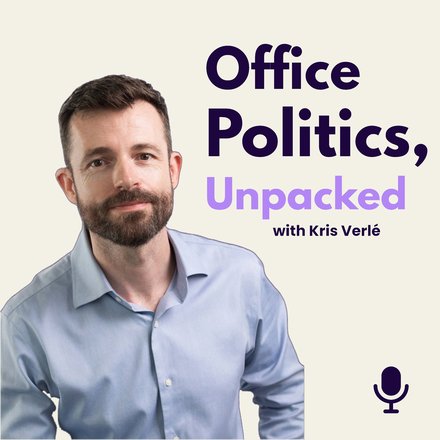
Office Politics, Unpacked
A podcast with Kris Verlé on workplace politics, influence, and leadership.
Frequently asked questions.
What exactly is executive coaching, and how is it different from mentoring or therapy?
Executive coaching is a structured, forward-focused partnership that sharpens your skills, shifts your habits, and delivers measurable improvements in how you lead. It differs from mentoring because a mentor passes on the perspective of an industry insider, while a coach focuses entirely on you, your goals, and your challenges. It differs from therapy because it works on where you’re going, not on unpacking your past. You get tools, perspective, and accountability that lead to progress you can see and track.
How do I know if I need a coach?
You’re likely ready for a coach when you’ve hit a level where your expertise is no longer the thing holding you back, and the challenges in front of you are about influence, judgement, and how you operate rather than technical skill. Common signs: you’re stalling despite strong performance, you’re navigating politics or relationships you can’t quite read, you’ve stepped into a bigger role and the old approach isn’t working, or you’re making high-stakes decisions with no one objective to think them through with. Coaching isn’t for people who are failing; it’s for capable people who want to get better at the parts of leadership that experience alone doesn’t teach. If any of that sounds like where you are, a chemistry call is the simplest way to find out whether it’s the right moment.
What outcomes can I realistically expect from executive or leadership coaching?
Expect clearer thinking, sharper decisions, stronger self-awareness, and a leadership style that feels like your own. Most clients communicate more powerfully, hold their nerve under pressure, and influence people more effectively. Organisations often see measurable returns too, in team performance, engagement, and retention. The exact outcomes depend on what you bring and what you’re willing to change.
Is coaching only for people who are struggling, or is it also for high performers?
Coaching is developmental, not remedial, and most of my clients are already accomplished. They’ve simply reached the point where expertise alone no longer carries them, and they want to influence rather than just execute. As Marshall Goldsmith put it, “what got you here won’t get you there.” That shift, from being the most capable person in the room to being the most influential, is exactly what coaching works on.
How do I find the right coach for me?
Choose a coach with solid training, professional accreditation, and proven experience coaching leaders at your level, then find out in a chemistry call whether you feel challenged and understood by them. Beyond the credentials, the right coach asks sharp questions, listens closely, and isn’t afraid to push you. One thing worth weighing: coaching backgrounds differ. I spent fifteen years as a political strategist and lobbyist before I coached anyone, so I read organisational power and influence differently from a coach who has only worked inside companies. If your challenge is political as much as personal, that’s a reason to talk to me rather than someone else.
What actually happens in a coaching session?
A coaching session is a focused, confidential conversation aimed at a real problem you’re facing, not a general chat. I ask the questions you’re not asking yourself, reflect back patterns you might not notice, and offer practical strategies when they help. One session might be big-picture, about your direction or your positioning; another might be how to handle tomorrow’s board meeting. You leave each one with sharper insight and clear next steps.
How long does a coaching engagement usually last, and how often are sessions?
Most engagements run three to six months, with a session every two to four weeks. That’s long enough for real change and frequent enough to keep momentum. I also offer one-off “flashpoint” sessions when you need clarity on a single decision fast, and longer partnerships for clients working through a major transition.
What’s the ROI of coaching and is it really worth it?
The return depends on what you bring and what you’re willing to change, but clients typically report more influence, clearer thinking, stronger communication, and better relationships. Some get promoted, some change direction, others simply feel more in control of their work. For organisations, the return usually shows up in team performance, engagement, and retention. Coaching pays off when you come ready to act on it.
Can coaching help with imposter syndrome?
Yes. Coaching is one of the most effective ways to work through imposter syndrome because it addresses the specific situations where the self-doubt shows up rather than treating it as a fixed trait. Most capable people feel like a fraud at some point, usually just after a step up, when the gap between how they feel and how they’re perceived is widest. Coaching helps you see that gap clearly, separate the doubt from the reality of your track record, and build the confidence to act despite it. We work on the concrete moments where it bites, the meeting you dread, the decision you’re second-guessing, the room where you feel you don’t belong, and on the patterns underneath them. The goal isn’t to eliminate self-doubt entirely, but for it to stop driving your behaviour.
How can coaching help me grow as a leader, especially when I already have expertise?
Coaching helps because expertise stops being the thing that sets you apart once everyone around you is also expert. At senior level, what carries you further is influence, presence, and composure under pressure, especially when you’re managing competing demands and high-stakes relationships. Coaching moves you from knowing to leading. It’s no longer about being the smartest person in the room; it’s about being the one others follow.
Can I ask my company to pay for coaching, and how should I approach that conversation?
Yes, and many clients do. Position coaching to your employer as a strategic investment in your leadership, not a sign you’re struggling, and anchor the conversation in business outcomes: better communication, leading through change, running a team more effectively. Bring specifics about what you want to develop and why it matters to the organisation. I’m happy to provide a proposal or speak with your HR or L&D team if that helps.
What makes your coaching different from other executive coaches?
What sets my coaching apart is my background: I spent fifteen years as a political strategist and lobbyist before becoming a coach, so I work on power, influence, and organisational politics from direct experience, not theory. Most executive coaches come from HR, psychology, or corporate leadership. That’s valuable, but it means the political and relational side of senior roles, like reading power, building coalitions, influencing people you don’t control- is often the part they understand least. It’s the part I know best. If the gap you’re trying to close is as much political as personal, that’s the reason to work with me rather than a more conventional coach.